Speech and Language Therapy (SLT)
Home / SLT

What is Speech and Language Therapy (SLT)?
For children with special needs, including those with autism and Down syndrome, Speech and Language Therapy (SLT) is a critical intervention that is tailored to their unique profile of communication strengths and challenges. The goal is to improve overall communication, reduce frustration, and enhance social interaction.
The role of Speech and Language Therapists for Special Needs Children
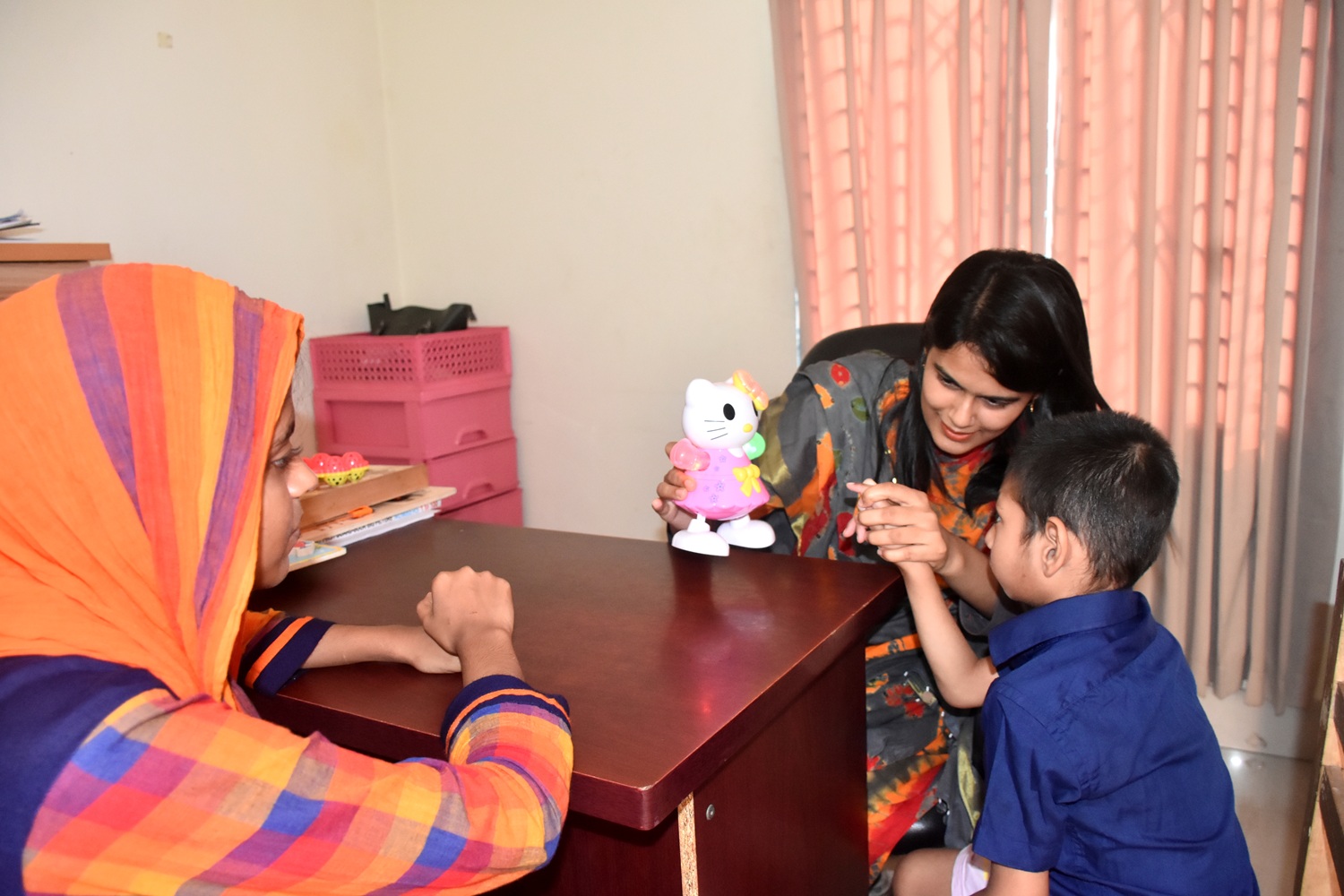
Speech and Language Therapists are skilled at using evidence-based, child-focused techniques that incorporate play and the child’s individual interests to develop communication skills.
For children with special needs, SLT focuses on:
- Building social communication skills: Addressing difficulties with social interaction, such as making eye contact, understanding social cues, and navigating conversations.
- Oral motor skills: For conditions like Down syndrome, therapists use exercises and feeding techniques to improve muscle strength and coordination in the mouth and jaw, which helps with eating, drinking, and speech clarity.
- Language development: Therapists use interactive activities and repetition to help children improve their understanding of language (receptive language) and their ability to express their needs and thoughts (expressive language).
- Receptive and expressive language: Helping with understanding language, forming sentences, and expanding vocabulary.
- Articulation and phonology: Addressing problems with making sounds and pronouncing words clearly.
- Voice disorders: Improving vocal quality, pitch, or loudness, which can be affected by factors like vocal nodules or neurological issues.
- Fluency disorders: Working with individuals who stutter or clutter to improve the flow and rhythm of their speech.
- Social communication (pragmatics): Developing skills for effective social interaction, such as understanding conversational rules and using language appropriately.
- Cognitive-communication: Addressing communication challenges related to memory, attention, problem-solving, and organization, often following a brain injury or dementia.
- Dysphagia: Helping with eating, drinking, and swallowing difficulties by strengthening mouth muscles and using modified food textures.
- Reducing frustration: By giving a child effective ways to communicate, SLT can dramatically reduce the frustration and challenging behaviors that can arise from being misunderstood.
SLT for children with autism
Autistic children may experience a range of communication differences, and SLT is adapted to a neurodiversity-affirming approach that celebrates their unique communication style.
- Visual supports: Therapists often use visual aids, such as picture schedules and social stories, to help children understand and prepare for new events or changes.
- Following interests: By incorporating a child’s special interests, therapists can build motivation and engagement in communication activities.
- Functional communication: A key goal is to help a child develop practical communication skills for daily life, such as asking for what they want or need.
SLT for children with Down syndrome
Children with Down syndrome often have a specific profile of strengths and challenges in their communication, which SLTs address with individualized plans.
- Visual learning: Because many children with Down syndrome have better visual memory than verbal memory, therapists use visual resources like flashcards, symbols, and sign language to support language development.
- Expressive language: Therapy focuses on helping children learn to formulate grammatically correct sentences and improve their spoken language, which often develops more slowly than their receptive language.