
ABA (Applied Behavior Analysis) Therapy
Home / ABA Therapy
ABA (Applied Behavior Analysis) Therapy
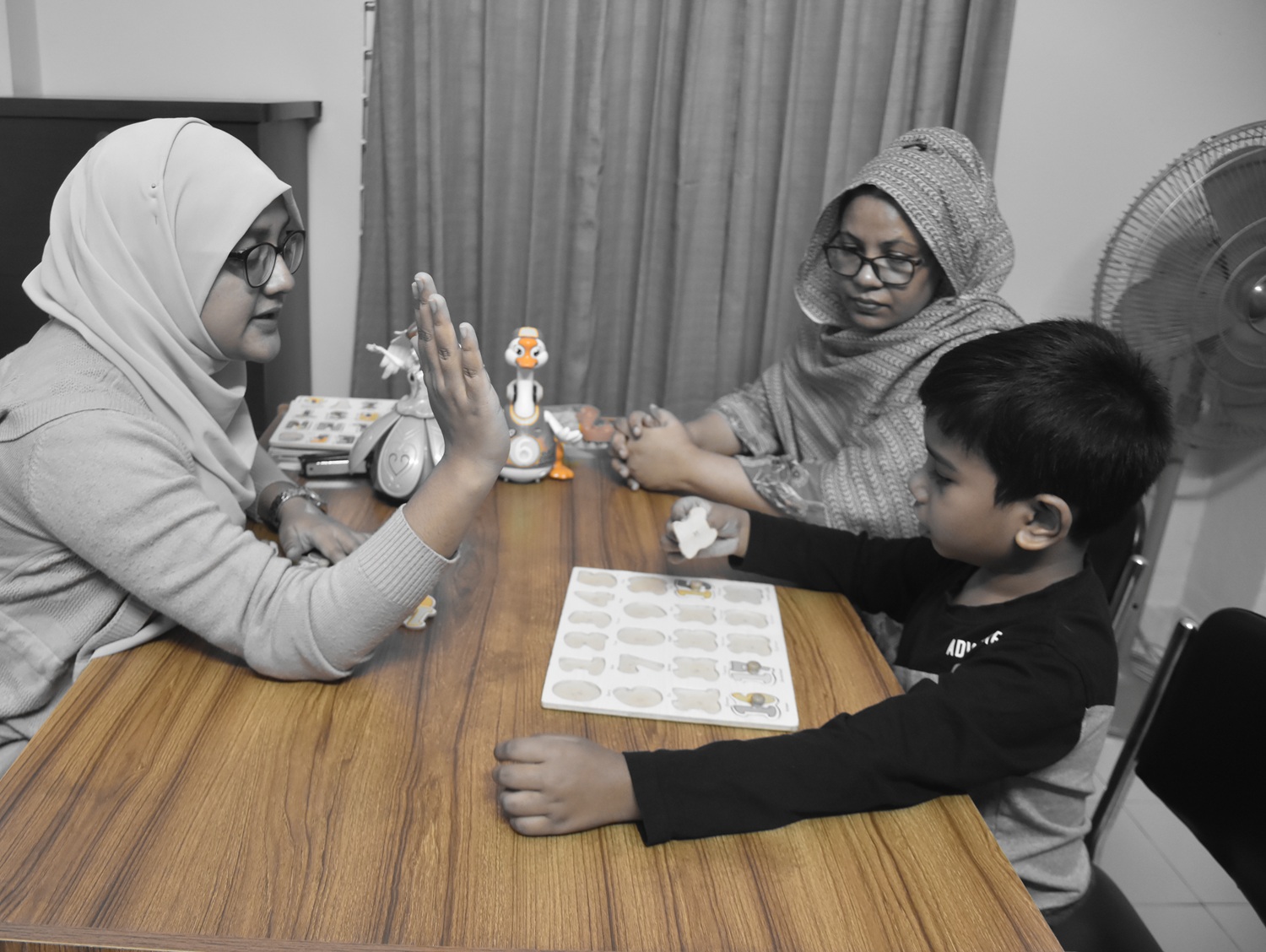
Applied Behavior Analysis (ABA) is a therapy based on the science of learning and behavior, widely used for children with special needs, particularly those with Autism Spectrum Disorder (ASD). It focuses on increasing helpful behaviors and reducing harmful ones through positive reinforcement.
How ABA therapy works
ABA therapy begins by conducting an assessment to understand a child’s skills, needs, and challenges. This leads to a personalized treatment plan with measurable goals for improving specific behaviors.
Core principles and techniques include:
- Positive reinforcement: Desirable behaviors are rewarded to encourage them to happen again.
- Individualized approach: The treatment plan is customized to the child’s unique needs and interests, rather than following a “one-size-fits-all” model.
- Breaking down skills: Complex tasks are divided into small, manageable steps to make learning more achievable.
- Parental involvement: Caregivers are trained to use ABA strategies at home, reinforcing progress and ensuring consistency across different environments.
Data-driven practice: Therapists continuously collect data to monitor the child’s progress and adjust the treatment plan as needed.
Who can benefit from ABA?
ABA therapy is most commonly associated with children with ASD but can be used for individuals with a range of conditions, including:
- Autism Spectrum Disorder (ASD)
- Developmental delays
- Attention-Deficit/Hyperactivity Disorder (ADHD)
- Obsessive-Compulsive Disorder (OCD)
- Oppositional Defiant Disorder (ODD)
Benefits of ABA therapy
ABA aims to help children build essential life skills, including:
- Communication skills: Enhances verbal and non-verbal communication.
- Social skills: Teaches skills like sharing, taking turns, and understanding social cues to build better relationships.
- Adaptive skills: Fosters independence by teaching daily living skills, such as dressing, eating, and hygiene.
- Behavioral regulation: Helps reduce challenging behaviors, like tantrums or aggression, and replaces them with more functional alternatives.
- Academic skills: Can improve focus, problem-solving, and the ability to follow instructions.
Key components of an educational therapy program
- Individualized assessment: An initial evaluation to understand the child’s unique strengths, weaknesses, and learning style.
- Customized intervention plan: A personalized strategy is developed based on the assessment, which may include specific activities, tools, and multi-sensory methods.
- Skill-building strategies: Therapists teach specific techniques to help children with their challenges, such as using graphic organizers for a child with dyslexia or behavioral strategies for a child with ADHD.
- Collaboration: Educational therapists often work with parents, teachers, and other professionals to ensure a consistent and holistic approach to the child’s support.
- Building confidence: The program aims to improve not only academic skills but also the child’s self-confidence and overall well-being.