
Swimming Training
Home / Swimming Training
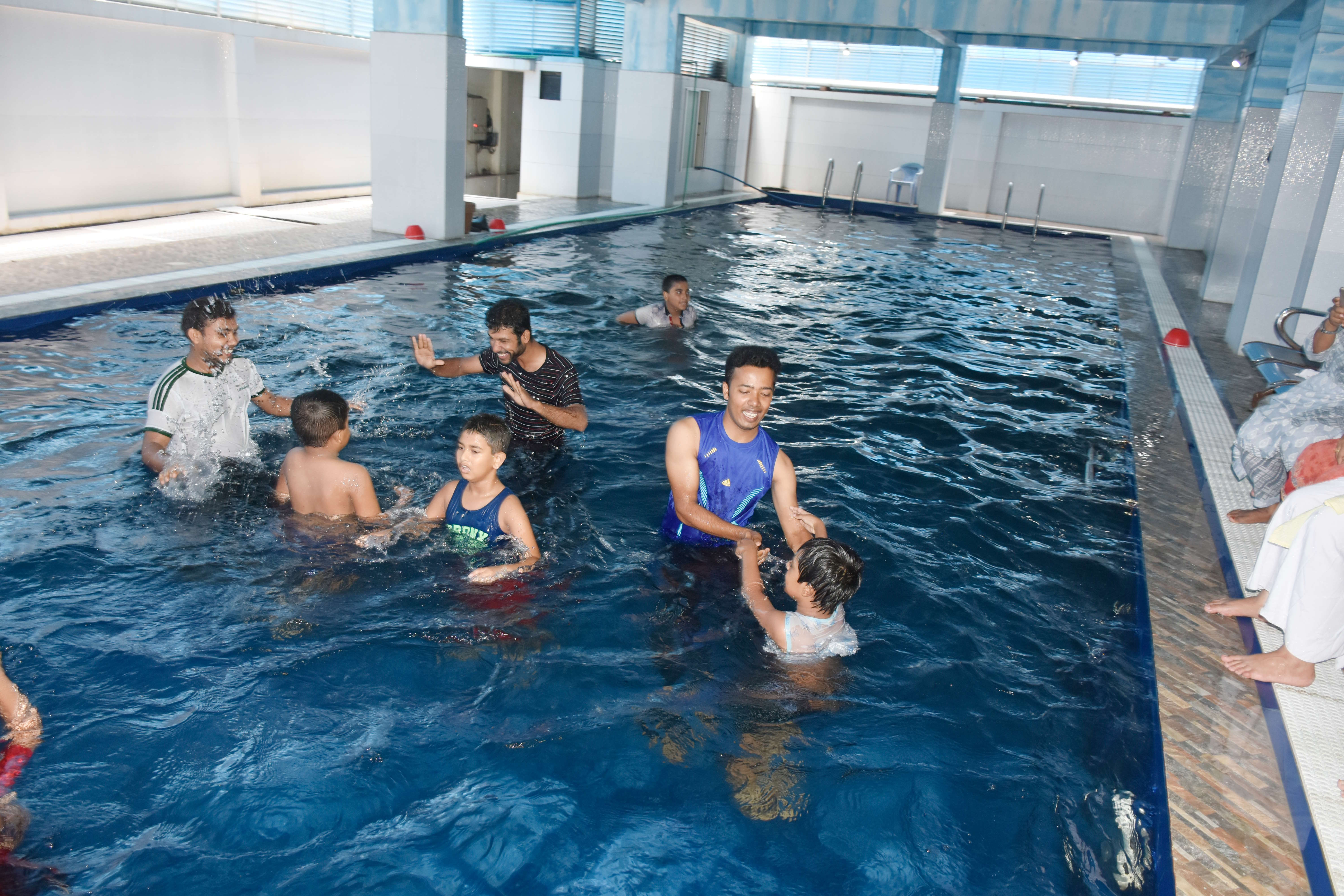
Swimming Training
Swimming training for children with special needs, often called “adaptive aquatics,” offers significant physical, mental, and social benefits. Specialized programs and instructors tailor the experience to a child’s unique abilities and needs, focusing on safety, skill-building, and creating a comfortable, fun environment.
Benefits of adaptive swim training
- Enhances safety: Tragically, drowning is a leading cause of accidental death for children with autism and other special needs. Swim training provides essential water safety and survival skills.
- Improves physical development: Swimming is a low-impact exercise that builds muscle tone, strength, coordination, and endurance. The water’s buoyancy also relieves joint pressure and can increase a child’s range of motion.
- Aids sensory integration: For children with sensory processing challenges, the feel of the water can be both calming and therapeutic. The water’s resistance also provides proprioceptive feedback, which helps with body awareness.
- Boosts confidence: Mastering a new skill like swimming empowers children, helping them to build self-esteem and a sense of accomplishment that can extend to other areas of their lives.
- Promotes social skills: Group lessons or one-on-one interactions with instructors and peers provide opportunities to practice communication and turn-taking in a structured yet relaxed setting.
Giving importance to this issue, “Smiling Children Special School” has been operating a
special education system. The services provided by this school through the said
education system are:
Training and teaching strategies
The approach to teaching swim skills must be flexible and tailored to each child. Adaptive instructors often use the following techniques:
- Gradual introduction: Start with small, manageable steps. Allow the child to get comfortable with the pool environment by splashing or playing in the shallow end before progressing to more complex skills.
- Visual supports: Many special needs children are visual learners. Using picture schedules, social stories, or visual aids can help them understand the routine and expectations for the lesson.
- Sensory considerations: Accommodate sensory sensitivities by using earplugs or goggles and choosing a quieter time to swim. Familiarize the child with the environment’s sounds, smells, and temperature before starting.
- Consistent routines: A predictable routine for entering the pool, completing activities, and ending the lesson can help minimize anxiety and provide a sense of stability.
- Positive reinforcement: Use verbal praise, toys, or other small rewards to motivate and celebrate milestones, no matter how small they seem.
- Adapted equipment: Use floating devices, specialized swim caps, or flotation belts to help children with limited mobility or strength.
- Meet the child where they are: Be patient and flexible. It is important to build a relationship of trust first, which may take time. Focus on making the experience positive and fun.
- Individualized instruction: For some children, private, one-on-one lessons may be more effective than group settings. This allows for customized lesson plans and a focused pace